
 EN
EN



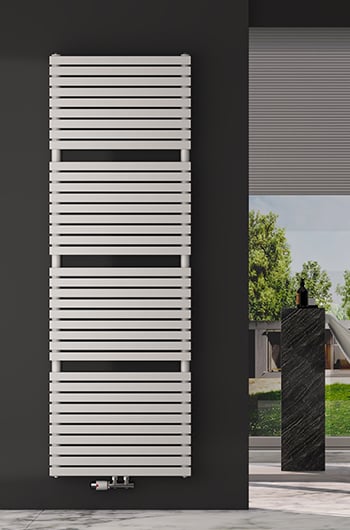
You’re standing in a half-finished bathroom. The plumber asks: “Towel rail or radiator?” Both heat the room. Both hang on the wall. But they solve very different problems.
We looked at what homeowners say on Reddit and UK heating forums and pulled apart the specs. Here’s what you need to know.
What Real Users Say
Forget the brochures. The most honest feedback comes from people who’ve lived with both.
On UK forums, a recurring theme is the “towel rail looks great but…” problem. One user with a heated towel rail in two bathrooms admitted: “Both were chosen for looks, not heat output. They keep small rooms toasty—but I wouldn’t rely on one in a bigger space.”
Another complaint: hanging damp towels over a towel radiator blocks heat. An Ideal Home editor confessed: “I wish I’d thought about how covering it in damp towels would mean less heat entering the room.”
Reddit threads show a clear split. Some love their heated towel rail for warm towels. Others wish they’d installed a proper bathroom radiator because the room never gets warm enough in winter.
Which camp will you fall into? It depends on heat output, material quality, and control.
Heat Output: The Number That Matters
Towel Rails vs. Radiators by the Numbers
A standard panel bathroom radiator produces 2,000–6,000 BTUs. A heated towel rail? Typically 800–2,500 BTUs. That gap matters.
For a typical 4–6m² UK bathroom, you need roughly 2,000–2,500 BTUs. Many larger towel radiators hit that target. But if your bathroom is north-facing, poorly insulated, or larger than 8m², a standard heated towel rail will struggle.
As one heating engineer on Reddit put it: “Towel rails don’t have anywhere near the thermal output of a good rad.”
Why Material Matters: Low Carbon Steel vs. Everything Else
Most buying guides skip this: the material your towel radiator is made from affects heat output and lifespan.
Low carbon steel radiator construction is the industry standard. It conducts heat efficiently, resists corrosion, and holds up to humid bathrooms. Avonflow’s heated towel rail range uses international-standard mild steel with powder-coated or chrome finish—rated IPX4 for bathroom use.
That IP rating means protection against splashing water from any direction. In a bathroom, that’s the difference between five years and fifteen.
Surface temperature also matters. Avonflow’s electric models run at 55°C ± 3°C—hot enough to dry towels, not hot enough to burn on contact.
Running Costs and Control: Where TRVs Change the Game
Plumbed vs. Electric: The Real Cost Difference
A plumbed towel radiator connected to central heating costs almost nothing extra to run. An electric heated towel rail draws power independently. UK utility comparisons put electric running costs at 15–30p per hour. Run it 12 hours daily and you’re looking at £330 a year.
That doesn’t mean electric is always wrong. For renters or bathrooms far from the boiler, a plug-in electric heated towel rail is often the only practical option. Just know the running cost.
The Thermostatic Radiator Valve Advantage
Whether you choose a towel radiator or a standard bathroom radiator, fitting a thermostatic radiator valve (TRV) gives you room-by-room control.
A thermostatic radiator valve senses air temperature. When the room hits your set point, it reduces hot water flow. When the room cools, it opens again. You’re not heating a bedroom to living-room temperatures.
The Energy Saving Trust estimates thermostatic radiator valves can save up to £75 per year. Payback? Around two years, according to eu.bac. For new builds, UK Building Regulations Part L already requires thermostatic radiator valves in most rooms.
Avonflow’s thermostatic radiator valve TRCD39 is rated TELL A, with a 6°C to 28°C range and anti-frost protection—certified to European efficiency standards.
Matching the Solution to Your Household
Working Professionals
You’re out 9 to 5. You want a warm bathroom when you wake and when you return—without heating an empty room all day.
Best setup: A plumbed towel radiator with a thermostatic radiator valve, timed to warm up 30 minutes before your alarm and again before your evening routine. If plumbing isn’t an option, an electric heated towel rail with a timer works—just programme it 20 minutes before use.
Families with Young Children or Elderly Relatives
Two priorities: consistent comfort and safety. Children and older adults are more sensitive to temperature swings. Exposed hot bars on any bathroom radiator or heated towel rail pose a burn risk for toddlers.
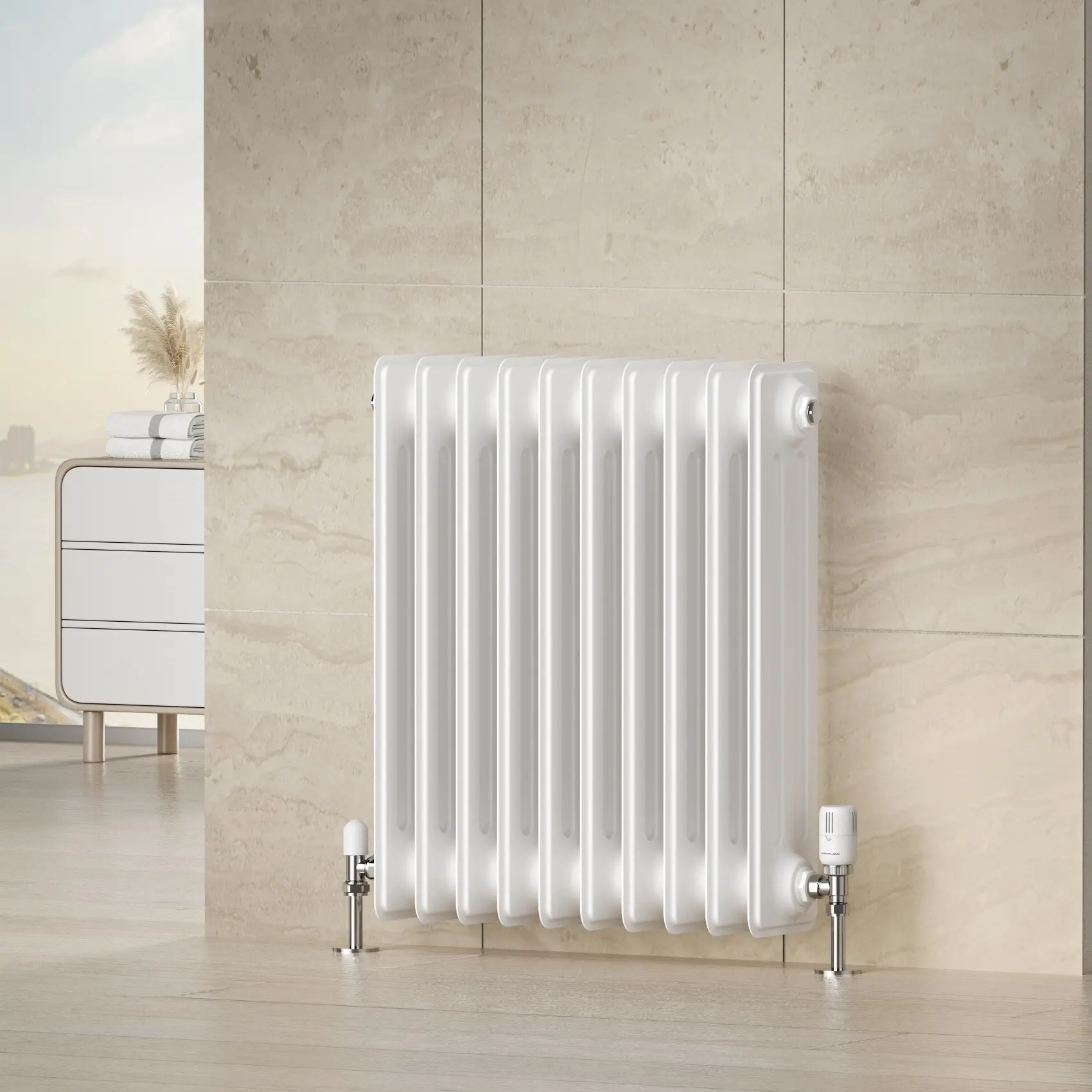
Best setup: A high-output towel radiator with a lower surface temperature (55°C is manageable) paired with underfloor heating if budget allows. For larger family bathrooms, consider a heated towel rail for towels plus a compact panel bathroom radiator for background warmth. Always fit thermostatic radiator valves on every radiator except one—UK regulations require a bypass radiator.
Renters and First-Time Buyers
You can’t replace the radiator or install a plumbed towel radiator. But you’re not stuck with damp towels.
Best setup: A plug-in electric heated towel rail with a timer and low surface temperature. No plumbing, no electrician, no landlord approval beyond a standard outlet. Look for IPX4 rating and powder-coated finish—they survive humidity and move with you.
Avonflow’s Approach
Avonflow’s heated towel rail range balances design with measurable performance. The electric series runs from a 700×450mm model producing 891 BTUs up to an 1800×500mm unit rated at 2,777 BTUs. That larger size can serve as the primary heat source in a small-to-medium bathroom while still warming towels.
Key specs:
Material: International-standard mild steel (low carbon steel radiator construction) with powder coating or chrome finish
IP rating: IPX4
Surface temperature: 55°C ± 3°C
Certifications: CE, GS, NF, Keymark, A-Grade Energy Efficiency
Power options: Electric heating rods or hot water connection
For larger bathrooms, Avonflow’s higher-output models combine with a traditional bathroom radiator. For whole-home control, Avonflow manufactures thermostatic radiator valves and MRVs for standard radiator systems.
FAQ
Can a heated towel rail replace a radiator?
Yes, if your bathroom is small to medium (up to 8m²) and well-insulated. For larger or colder rooms, consider a higher-output model or combine it with a compact bathroom radiator.
What size towel rail do I need?
Use a BTU calculator. For a typical 4–6m² bathroom, aim for 2,000–2,500 BTUs. Avonflow lists BTU output for every model.
Is plumbed or electric better?
Plumbed is cheaper to run. Electric is easier to install and suits bathrooms without plumbing access, but costs 15–30p per hour.
Will a towel rail keep my bathroom warm in winter?
In a small bathroom, yes. In larger or poorly insulated spaces, pair a heated towel rail with underfloor heating or a small bathroom radiator.
Can I install a heated towel rail myself?
Plug-in electric models are DIY-friendly. Plumbed models require a qualified plumber or heating engineer.
How long do heated towel rails take to warm up?
Electric models: 15–30 minutes. Plumbed models: 20–30 minutes from cold.